Event date: June 17, 2026 | Category: Capital Markets, Monetary Policy
From Rate Cuts to Rate Hikes: The Big Reversal
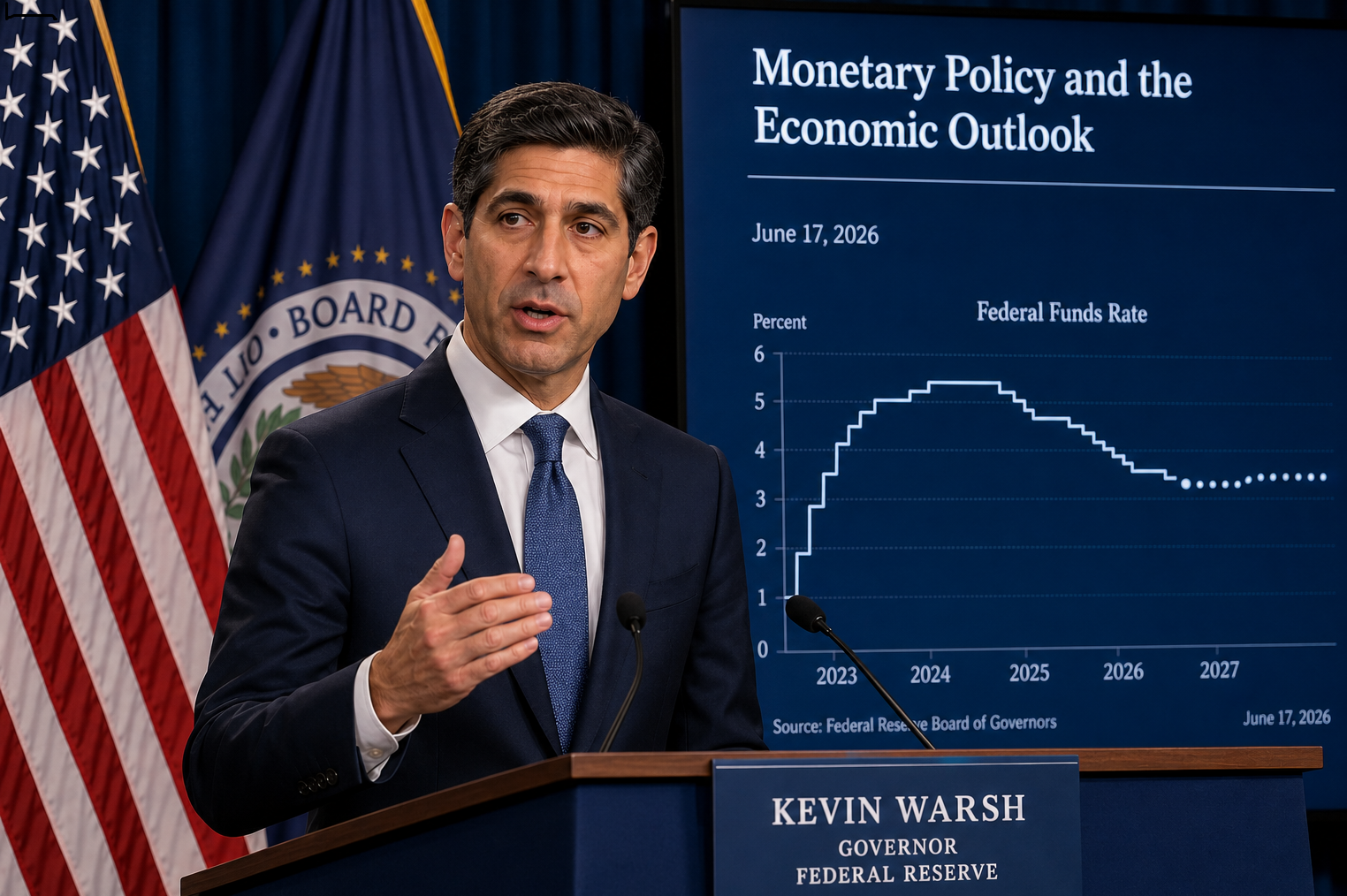
Markets had entered 2026 pricing in further rate cuts. By June, that expectation had flipped: the Fed’s updated dot plot showed officials leaning toward one or two hikes before year-end rather than additional easing. Warsh notably abstained from submitting his own projection, leaving traders to parse his public remarks even more closely than usual for signals about his approach to communication and forward guidance.
Inflation, Tariffs, and the Energy Factor
The shift reflects a genuinely more complicated inflation picture. Tariffs introduced earlier in the year, combined with an energy-price shock tied to the conflict in the Middle East, pushed inflation readings higher through the spring, complicating the case for further rate cuts even as job growth cooled. Treasury yields jumped following the announcement, with short-term yields moving up sharply as markets repriced the odds of a hike over a cut.
What It Means for Business Planning
For companies of any size, the practical takeaway is that the rate environment which shaped 2024 and 2025 planning, one where cuts were the base case, may no longer hold. Borrowing costs, capital expenditure timelines, and hiring plans that assumed continued easing are worth revisiting under a scenario where rates stay flat or edge higher through the rest of 2026. It is also a reminder that a new Fed Chair’s first meeting is rarely just procedural: it is often the moment markets start pricing in an entirely new reaction function.